
Getting children to brush their teeth twice a day can sometimes feel like a daily challenge. There may be rushed mornings, busy school days and bedtime routines that do not always go according to plan. But making brushing a consistent part of the day can play an important role in protecting children’s teeth.
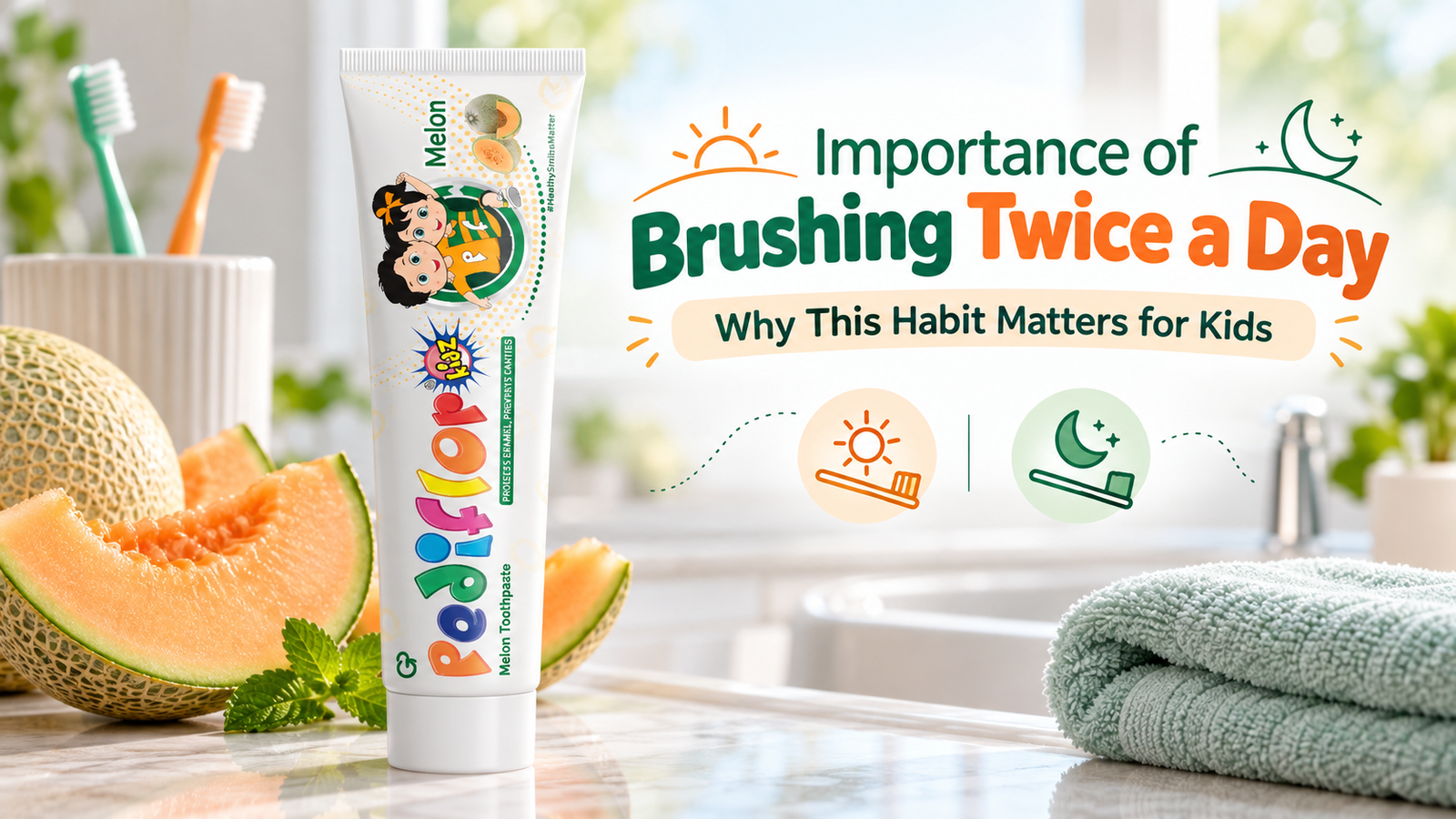
The importance of brushing twice a day comes down to something simple: plaque does not wait for a convenient time. It can build up on teeth throughout the day, which is why regular brushing helps keep children’s mouths cleaner and their teeth better protected.
For parents, establishing a kids oral care routine that includes morning and bedtime brushing is one of the simplest habits to start early.
Why Is Brushing Twice a Day Important for Kids?
Children’s teeth are exposed to food, drinks and naturally occurring bacteria throughout the day. When bacteria combine with food particles and saliva, they can contribute to the formation of plaque.
If plaque is not removed regularly, the acids produced by bacteria can contribute to enamel damage and tooth decay.
This is where twice daily brushing for kids becomes important. Brushing helps physically remove plaque and food particles while fluoride toothpaste can provide additional protection for the teeth.
Why Does Plaque Need Regular Removal?
Plaque Builds Up Throughout the Day
Plaque is a sticky film that can form on the surfaces of teeth. It is not something that appears only after eating sweets or sugary foods. Plaque can develop as part of normal daily activity in the mouth.
Children may not notice plaque because it is often not visible. That can make it easy to underestimate the importance of brushing consistently.
Regular brushing helps interrupt this buildup before plaque remains on the teeth for extended periods.
How Can Plaque Contribute to Tooth Decay?
The bacteria present in plaque can use sugars from food and drinks and produce acids. Repeated exposure to these acids can weaken tooth enamel and contribute to cavities over time.
This does not mean that every child who misses one brushing will develop a cavity. Tooth decay is influenced by several factors, including diet, oral hygiene, fluoride exposure and individual susceptibility.
However, keeping plaque under control is an important part of reducing the factors that contribute to tooth decay.
What Does Brushing Twice a Day Actually Do?
Brushing Helps Remove Plaque and Food Particles
One of the main purposes of brushing is mechanical cleaning.
A toothbrush helps remove plaque and food particles from tooth surfaces, including areas that may otherwise be missed during everyday eating and drinking.
Brushing twice a day gives children two regular opportunities to clean their teeth rather than allowing plaque to remain undisturbed for longer periods.
Fluoride Toothpaste Adds Protection
The toothpaste used during brushing also matters.
A fluoride toothpaste for children can help strengthen enamel and support protection against cavities when used appropriately. Parents should choose a toothpaste suitable for their child’s age and oral health needs and use the recommended amount.
This means that an effective routine is not simply about brushing more often. It is about combining consistent brushing, appropriate toothpaste and good brushing habits.
Why Do Morning and Bedtime Brushing Both Matter?
If your child has time for only one brushing session, it may be tempting to think that morning and bedtime brushing are interchangeable.
They are both important parts of the daily routine, but they serve different practical purposes.
Morning Brushing Starts the Day With a Cleaner Mouth
During sleep, the mouth continues to have bacteria and plaque present on the teeth.
Morning brushing helps clean the teeth after the overnight period and removes plaque that has accumulated since the previous brushing.
It also gives children a fresh start to the day before breakfast and other daily activities.
Bedtime Brushing Is Especially Important
Bedtime brushing deserves particular attention because it is the last opportunity to clean the teeth before a long period without brushing.
During sleep, saliva flow generally decreases. Saliva plays an important role in the mouth, including helping clear food particles and buffering acids.
When saliva flow is lower, the mouth has less of this natural protective action. Leaving plaque and food debris on the teeth at bedtime therefore means they remain in the mouth for longer while the child sleeps.
That is why making bedtime brushing a non-negotiable part of a child’s routine can be so valuable.
What Happens When Bedtime Brushing Is Skipped?
Missing bedtime brushing once does not automatically cause tooth decay. The concern is when skipping becomes a regular habit.
If brushing is skipped repeatedly, plaque can remain on the teeth for longer periods, giving bacteria more opportunity to interact with sugars and produce acids.
A simple way to think about it is:
Morning brushing cleans the teeth after the night.
Bedtime brushing cleans the teeth before the night.
Both help maintain a consistent cycle of plaque removal.
How Can Parents Build a Twice-Daily Brushing Habit?
Knowing the importance of brushing twice a day is one thing. Making children follow the routine every day is another.
The easiest approach is to connect brushing with routines that already happen.
For example:
Morning: Wake up → brush → get ready for the day
Night: Finish dinner → complete bedtime routine → brush → sleep
When brushing happens at approximately the same points every day, children gradually begin to recognise it as a normal part of their routine rather than something they need to be reminded about every time.
Keep the Routine Simple
Parents do not need to create an elaborate system.
A consistent routine can simply involve:
- Brushing twice a day
- Spending about two minutes brushing each time
- Using an appropriate fluoride toothpaste
- Using a child-friendly toothbrush
- Supervising younger children
- Encouraging children to spit out the toothpaste after brushing
The goal is consistency, not perfection.
Making Twice-Daily Brushing More Enjoyable
Children are often more willing to follow routines when they feel involved.
Parents can make brushing more engaging by:
- Letting children choose a suitable toothbrush
- Using a two-minute timer
- Brushing together as a family
- Using a fun toothpaste flavour
- Creating a simple brushing chart
- Praising children for following their routine
Small changes can make brushing feel less like a chore and more like something the child expects to do every morning and night.
Making the Routine Interactive With the Pediflor Day & Night Kit
The Pediflor Day & Night Kit from Group Pharmaceuticals is designed around morning and bedtime brushing.
The kit includes:
- Bubblegum toothpaste
- Natural Orange toothpaste
- A Buddy Brush
- A Daily Habit Tracker
Having two flavours can give children some choice within their routine, while the habit tracker can help them visually follow their daily brushing schedule.
For parents, tools like these can make it easier to turn twice daily brushing for kids into a familiar habit.
What About Fluoride Toothpaste for Children?
Fluoride is an important consideration when choosing children’s toothpaste because it helps strengthen enamel and supports cavity prevention.
However, children do not necessarily need more toothpaste simply because they need more protection. The amount used should be appropriate for the child’s age and the product’s instructions.
Parents should also encourage children to spit out toothpaste after brushing rather than swallowing it.
If a child has frequent cavities or other specific oral health concerns, a dentist can recommend the most appropriate toothpaste and brushing routine for their individual needs.
Final Takeaway
The importance of brushing twice a day is easy to understand when you look at what happens between brushing sessions. Plaque continues to form throughout the day, while bacteria can contribute to acid production that may damage tooth enamel over time.
Morning brushing helps start the day with cleaner teeth, while bedtime brushing removes plaque and food particles before a long period of sleep.
For children, the best routine is one that is simple enough to follow every day: brush twice a day, use an appropriate fluoride toothpaste, brush thoroughly and make the habit consistent.
With guidance from parents and engaging tools such as the Pediflor Day & Night Kit, twice-daily brushing can gradually become a natural part of growing up and caring for a healthy smile.
Making brushing twice a day a regular habit can help support better oral health in children. Parents can also explore our guides on brushing techniques for kids, the right age for fluoride toothpaste, and how to prevent cavities in children for more practical kids’ dental care tips.